
The United States has expressed growing optimism that diplomatic efforts aimed at easing tensions around the Strait of Hormuz could soon produce a breakthrough, with senior officials indicating that an agreement may be finalized within the next few days.
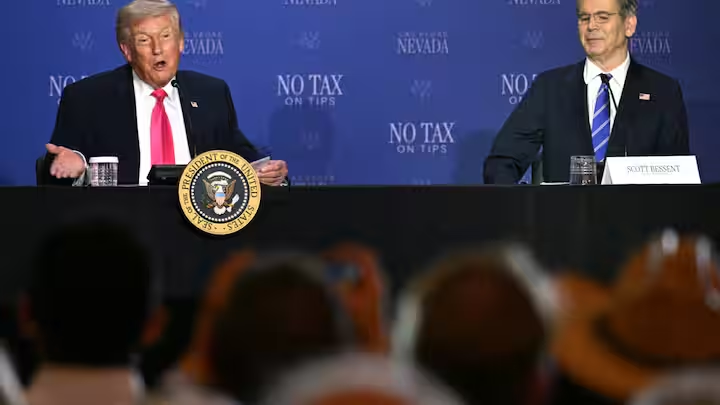
US Treasury Secretary Scott Bessent said ongoing negotiations have made meaningful progress, adding that discussions are moving in a positive direction. While acknowledging that several issues still need to be resolved, he noted that there is increasing confidence among negotiators that a deal is within reach.
The talks, facilitated by regional mediators, are focused on reducing military tensions, protecting commercial shipping routes, and restoring stability in one of the world’s most strategically important waterways. The Strait of Hormuz is a critical corridor for global energy supplies, making any disruption a major concern for international markets and governments alike.
According to officials familiar with the negotiations, a draft framework has already been circulated among the participating parties. Diplomatic teams are now reviewing the proposal and working to bridge the remaining differences before a final agreement can be announced.
Washington believes that a successful agreement would help reduce the risk of further confrontation in the Gulf region while ensuring the uninterrupted flow of international trade and oil shipments. US officials have emphasized that continued dialogue remains the most effective path toward long-term regional stability.
Despite the optimistic tone from the United States, challenges remain. Iran has maintained that it is not engaged in direct negotiations with Washington and has instead been communicating through intermediaries. This difference in public messaging highlights the complex nature of the diplomatic process, even as mediators continue to push both sides toward common ground.
Regional countries, including Qatar and Oman, have played an important role in facilitating communication between the two sides. Their mediation efforts are widely viewed as key to maintaining momentum in the negotiations and preventing further escalation in the Gulf.
Political analysts say the next few days could prove decisive. If the remaining issues are resolved, the agreement could mark a significant step toward lowering tensions between the United States and Iran while improving security in the Strait of Hormuz. However, they caution that until an official deal is signed, negotiations remain ongoing and subject to change.
With global attention focused on the talks, governments, energy markets, and shipping companies are closely watching developments, hoping that a diplomatic breakthrough will bring greater stability to one of the world’s most sensitive geopolitical regions.