
Dhaka: Bangladesh is exploring an alternative way to repay its massive Russian loan for the Rooppur Nuclear Power Plant, but a new proposal to settle transactions in Indian rupees could create fresh complications involving US sanctions, banking regulations and Dhaka’s recently signed trade agreement with Washington.
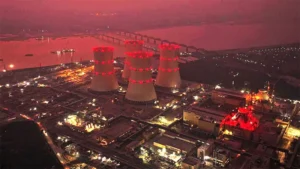
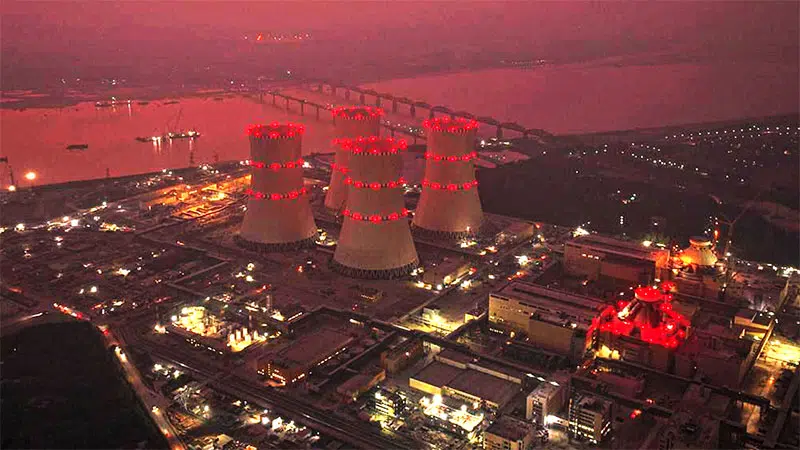
The Rooppur project has an estimated construction cost of around $12.65 billion, of which approximately $11.38 billion—nearly 90 percent—is financed through a Russian loan. The repayment mechanism has become increasingly complicated since Western sanctions were imposed on Russian banks and financial institutions following the war in Ukraine.
Why repayment has become difficult
The Russian state-owned bank VEB.RF, which has been involved in financial transactions linked to the Rooppur project, is under Western sanctions. As a result, Bangladesh has faced difficulties using traditional international banking channels to transfer payments to Russia.
Bangladesh previously explored using the Chinese yuan as an alternative payment currency. However, concerns among banks over possible sanctions exposure reportedly prevented that mechanism from being implemented smoothly. For now, money owed to Russia has been kept in an account at Sonali Bank.
Importantly, regular repayment of the $11.38 billion principal loan has not yet begun. Under the revised repayment schedule, the first instalment is due on September 15, 2028.
Russia proposes Indian rupee settlement
Against this backdrop, Russia reportedly proposed in late July that Bangladesh settle bilateral trade with Moscow using the Indian rupee.
Moscow has also proposed establishing a Russian bank branch in Dhaka and developing an alternative payment mechanism between the two countries.
The proposal is expected to be discussed during the next Bangladesh-Russia Intergovernmental Commission meeting, which could take place in September or October.
Bangladesh already has a rupee-based trade settlement arrangement with India that has been operating since 2023. The question now is whether that existing financial framework could somehow be used to facilitate transactions between Bangladesh and Russia.
However, simply choosing the rupee as a payment currency would not automatically solve the problem.
US trade agreement adds another complication
Bangladesh’s recently signed Agreement on Reciprocal Trade (ART) with the United States could become an important factor in determining whether the proposed arrangement is workable.
The agreement includes commitments by Bangladesh to cooperate with the US export-control regime concerning national-security-sensitive goods and technologies. It also contains provisions concerning transactions that could violate US sanctions or export controls.
The agreement does not, however, automatically require Bangladesh to impose every US sanction on another country. Nor does it explicitly prohibit Bangladesh from conducting all forms of economic cooperation with Russia or China.
But certain provisions relating to preferential trade agreements with countries described as “non-market countries” could create difficulties if such arrangements are considered to undermine the US-Bangladesh trade agreement.
Can the rupee actually solve the problem?
That remains the biggest unanswered question.
Experts say Bangladesh would need to determine which banks would process the payments, where the money would be held, whether Russian banks could receive the funds and whether the entire transaction could expose Bangladeshi financial institutions to US sanctions.
The experience with previous attempts to use the Chinese yuan demonstrates how complicated such arrangements can become. Bangladesh has previously faced concerns over making payments to sanctioned Russian entities even through alternative currencies.
Therefore, changing the currency from dollars to rupees does not necessarily remove the underlying sanctions risk.
A delicate balancing act for Dhaka
The issue puts Bangladesh in a difficult position.
On one side, Dhaka must maintain its financial obligations under the Rooppur loan agreement and preserve its relationship with Russia, which financed the country’s first nuclear power project.
On the other, Bangladesh must carefully consider its banking exposure to Western financial systems and the commitments it has made under its new trade agreement with Washington.
The proposed Indian rupee mechanism could potentially provide Bangladesh with an alternative route for settling payments, but its legality, banking feasibility and compatibility with international sanctions will need to be carefully examined before any final decision is taken.
The final decision is expected to depend on discussions involving Bangladesh Bank, the Economic Relations Division and Russian authorities.
For Bangladesh, the Rooppur loan is therefore becoming more than a simple debt-repayment issue. It has evolved into a complex intersection of Russia’s sanctions isolation, India’s rupee, Bangladesh’s banking system and Dhaka’s growing economic relationship with the United States.
The challenge now is to find a payment mechanism that allows Bangladesh to honour its Russian obligations without creating a new financial or diplomatic crisis.