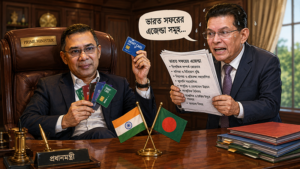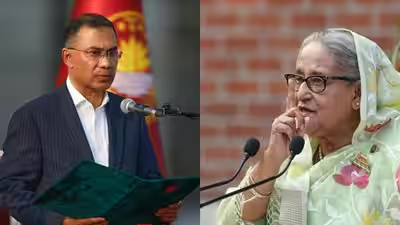

Dhaka/New Delhi: Bangladesh Prime Minister Tarique Rahman is likely to visit India in the coming days for his first bilateral trip to New Delhi since taking office, as Dhaka continues to press India over the extradition of former Prime Minister Sheikh Hasina.
The proposed visit has not yet been formally finalised, but diplomatic discussions between the two countries have intensified over the timing and agenda. Recent reports indicate that both sides are considering a visit in the August 20–25 window, with August 20–21 or August 21–22 among the possible schedules.
The trip would come at a particularly sensitive stage in Bangladesh-India relations. Ties have remained strained since the fall of Sheikh Hasina’s government in August 2024, with her continued presence in India becoming one of the most contentious issues between Dhaka and New Delhi.
Hasina extradition at the centre of talks
Bangladesh has repeatedly asked India to return Sheikh Hasina so that she can face legal proceedings in the country. The demand has remained a major foreign-policy priority for the Tarique Rahman-led government.
The issue has gained further prominence following Hasina’s recent media appearances from India. Dhaka strongly criticised New Delhi for allowing her to make public statements, while India said the extradition request was being examined through its established legal procedures.
Tarique Rahman has also stressed the importance of creating a “conducive environment” for improving relations with India. During his recent meeting with India’s new High Commissioner to Bangladesh, Dinesh Trivedi, the two sides discussed the need to strengthen bilateral ties despite outstanding disagreements.
New Delhi extends invitation
India has already invited Tarique Rahman for a bilateral visit. Indian External Affairs Ministry spokesperson Randhir Jaiswal confirmed on August 14 that New Delhi had extended an invitation to the Bangladeshi prime minister. India has also invited Rahman to attend the BRICS Summit’s Outreach session, scheduled to take place in September.
The proposed bilateral visit is therefore being viewed as an opportunity for both governments to address difficult issues directly and explore a possible reset in relations.
Apart from Sheikh Hasina’s extradition, the two countries have several other matters requiring attention, including border management, water-sharing, trade, energy cooperation, visa services and regional security.
A delicate diplomatic balancing act
For New Delhi, the Hasina extradition request presents a complicated diplomatic and legal challenge. India has maintained that the request is being considered according to its legal framework, while Bangladesh wants the process accelerated.
For Dhaka, however, the issue has strong political significance. The government faces domestic pressure to ensure that the former prime minister returns to Bangladesh and faces the cases pending against her.
At the same time, both countries have strategic reasons to avoid allowing the dispute to permanently damage their broader relationship.
Tarique Rahman’s expected visit could therefore become an important test of whether Dhaka and New Delhi can separate their disagreements over Sheikh Hasina from wider bilateral cooperation.
If the visit goes ahead as currently planned, the meeting could mark the first major face-to-face effort between the two governments to address the strained relationship since the change of government in Bangladesh.
For now, however, the final date and detailed programme remain under discussion, while the extradition of Sheikh Hasina is expected to remain one of the most sensitive issues on the bilateral agenda.