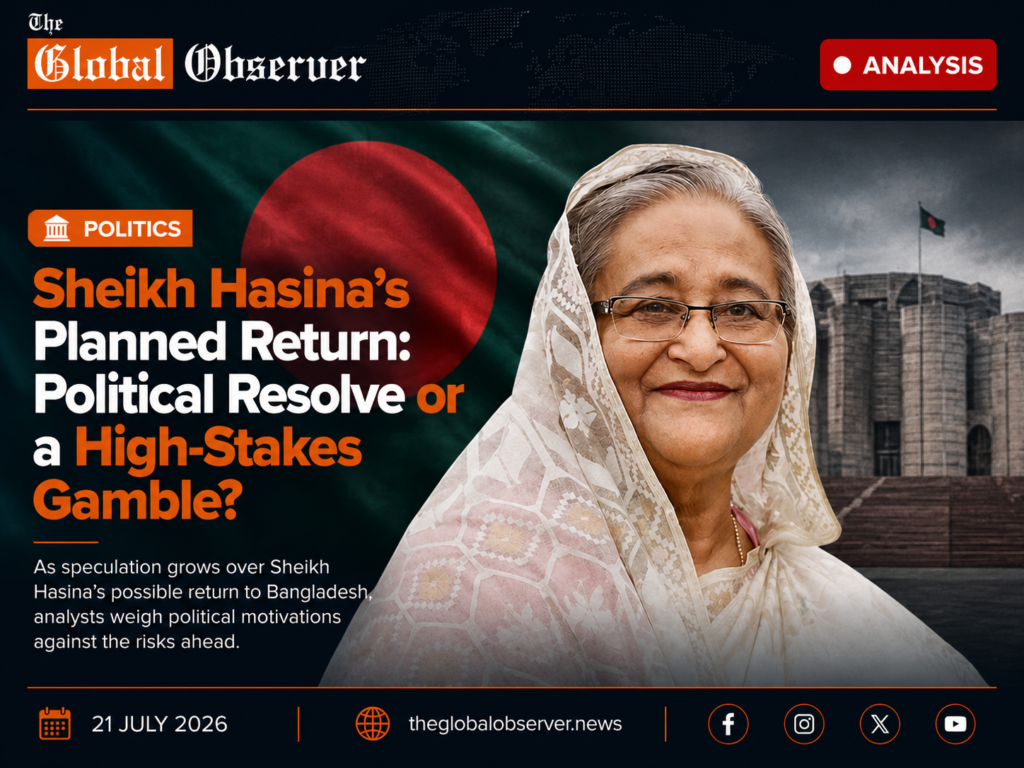

Former Bangladeshi Prime Minister Sheikh Hasina’s announcement that she intends to return to Bangladesh later this year has reignited political debate both inside the country and abroad. Living in India since leaving office during the political upheaval of August 2024, Hasina says she is prepared to return despite facing multiple legal cases and the possibility of immediate arrest. Her declaration has prompted questions about whether it represents a genuine political commitment or a calculated attempt to reshape Bangladesh’s political landscape.
A Return Amid Significant Legal Risks
Sheikh Hasina has indicated that she is willing to return to Bangladesh even if it results in her arrest or places her personal safety at risk. The statement comes as she continues to face numerous legal proceedings related to events surrounding the end of her administration. Any return would likely trigger immediate legal action under existing court orders.
Her announcement has drawn international attention because it comes at a time when Bangladesh’s political environment remains deeply polarized following the 2024 transition of power.
A Message to Supporters
Political observers believe the announcement also carries symbolic importance for the Awami League and its supporters.
Since the party lost power, many senior leaders have faced legal challenges, while the organization has struggled to maintain its political presence. By publicly expressing her intention to return, Hasina appears to be signaling that she has not abandoned political life and remains committed to her party despite the legal and political pressures she faces.
Supporters may view the move as a demonstration of determination, while critics argue that it is primarily intended to rebuild political momentum ahead of future developments.
Why Announce It Now?
The timing of Hasina’s statement has attracted particular attention.
Analysts suggest the announcement may be aimed at several audiences simultaneously: her supporters in Bangladesh, the country’s political leadership, India, and the broader international community. By making the announcement through an international media platform, the message reached a global audience rather than remaining confined to domestic political discourse.
Some observers argue that the declaration itself may be as politically significant as any eventual return, regardless of whether the planned visit takes place on schedule.
Political Impact
If Sheikh Hasina returns to Bangladesh, the move could significantly influence the country’s political landscape.
Her presence would almost certainly become a major national issue, potentially reshaping political debates and affecting the strategies of rival parties. At the same time, her return could intensify political tensions because of the ongoing legal proceedings and the strong divisions that remain over her years in office.
Whether her return strengthens her political position or creates additional legal challenges will depend largely on how events unfold after her arrival.
Legal and Diplomatic Questions
Any return would involve more than political considerations.
Bangladesh’s judicial process would determine how pending cases are handled, while security arrangements and legal procedures would likely receive close domestic and international scrutiny. The situation may also attract attention from foreign governments and international organizations monitoring developments in Bangladesh.
Looking Ahead
At this stage, it remains uncertain whether Sheikh Hasina will return on the announced timeline or whether circumstances will change before then. However, her statement has already placed her and the Awami League back at the center of Bangladesh’s political conversation.
Whether the announcement proves to be an act of political resolve or a high-risk strategic gamble will ultimately depend on future developments, the legal process, and the response of Bangladesh’s political institutions and the public.