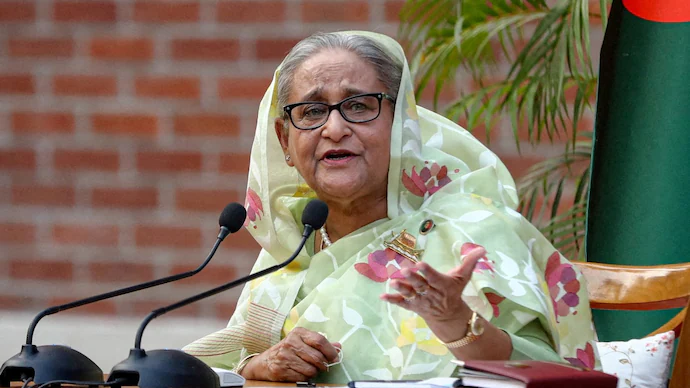

After nearly two years away from the public spotlight, former Bangladesh Prime Minister and Awami League President Sheikh Hasina is set to make her first public appearance on August 5. She is scheduled to speak at a virtual event from New Delhi, India, a move that has sparked fresh discussion among political observers in Bangladesh and across South Asia.
Analysts believe Hasina’s decision to re-emerge on August 5 carries strong symbolic significance. It was on this date in 2024 that she left Bangladesh following a mass student-led uprising that ended her tenure in office. By choosing the second anniversary of that event for her first public address, many see the move as a carefully calculated political message rather than a coincidence.
The event has been organized by the Foreign Correspondents’ Club of South Asia (FCC South Asia) and is scheduled to take place at the Sir Mark Tully Auditorium in New Delhi. The session will also be livestreamed on the organization’s social media platforms, allowing audiences in Bangladesh and around the world to follow the discussion.
According to the organizers, Hasina will be joined by her son, Sajeeb Wazed Joy, along with several senior Awami League leaders, including former Education Minister Mohibul Hasan Chowdhury Nowfel.
Political observers expect Hasina to use the occasion to outline her future political plans, discuss the direction of the Awami League, and address the possibility of returning to Bangladesh. In recent interviews with international media, she has repeatedly expressed her intention to return despite the legal and political challenges she may face.
Speaking to AFP in late July, Hasina said she was fully aware of the risks involved in returning home, including the possibility of arrest, imprisonment, or even threats to her life. Nevertheless, she maintained that she intends to return to Bangladesh and face the legal process, saying she feels compelled to do so because of the support and calls from her supporters.
Experts believe the event could have implications beyond Bangladesh’s domestic politics. With the BRICS Summit approaching and regional political dynamics continuing to evolve, Hasina’s reappearance is likely to attract attention from policymakers, diplomats, and international observers.
Questions remain over whether Hasina will announce a specific timeline for her return, unveil a new political strategy, or comment on Bangladesh’s current political situation. Those answers are expected to emerge during her address on August 5.
Her first public appearance in two years has already generated considerable interest among supporters, political analysts, and the international media. Whether the event marks the beginning of a new phase in Bangladesh’s political landscape will become clearer once she delivers her long-awaited remarks.