
By Staff Reporter | International Desk
Pakistan, Saudi Arabia and Türkiye are set to strengthen their strategic partnership by signing a new defence agreement aimed at expanding military cooperation and enhancing regional security, according to regional sources. The development comes as geopolitical tensions continue to rise across West Asia, prompting countries to deepen their security coordination.
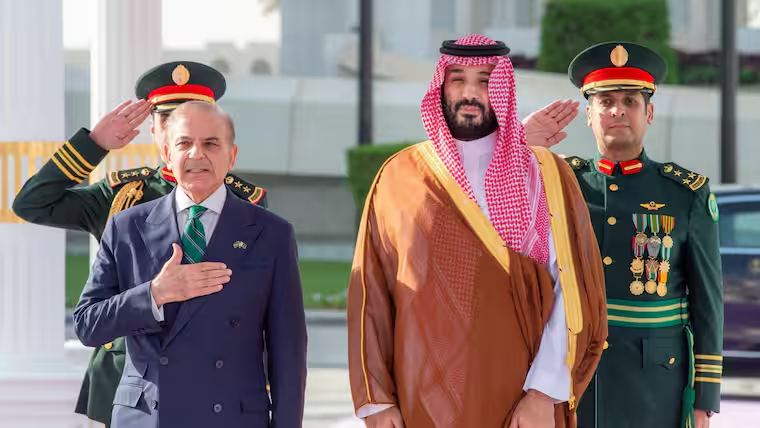
The agreement is expected to be signed during Pakistani Prime Minister Shehbaz Sharif’s official visit to Saudi Arabia, where he is accompanied by senior military officials, including Field Marshal Asim Munir. Discussions are reportedly focused on defence collaboration, intelligence sharing, military coordination, and joint responses to emerging regional threats.
While officials have not publicly disclosed the full contents of the pact, analysts believe it could significantly expand cooperation in areas such as drone technology, missile defence, military exercises, cybersecurity, and defence manufacturing. The three countries already maintain close bilateral defence ties, and the proposed framework is expected to elevate that cooperation to a broader strategic level.
The initiative comes against the backdrop of growing instability in the Middle East, including maritime security concerns, regional conflicts, and evolving security alliances. Observers say the proposed partnership reflects a wider effort by regional powers to strengthen their collective defence capabilities amid an increasingly uncertain geopolitical environment.
Security experts note that Pakistan’s military experience, Saudi Arabia’s strategic position and financial resources, and Türkiye’s rapidly expanding defence industry could make the partnership one of the most influential security arrangements in the Muslim world. Cooperation in advanced military technology, unmanned aerial systems, and defence production is expected to be among the key priorities.
Although comparisons have been made to a NATO-style security framework, officials have not described the agreement as a formal military alliance. Instead, it is expected to focus on strengthening defence cooperation while allowing each country to maintain its independent foreign and security policies.
Regional analysts believe the agreement could reshape the strategic balance in West Asia by creating a stronger defence partnership among three major regional powers. At the same time, they caution that its long-term impact will depend on the final provisions of the agreement and how the participating countries choose to implement it.