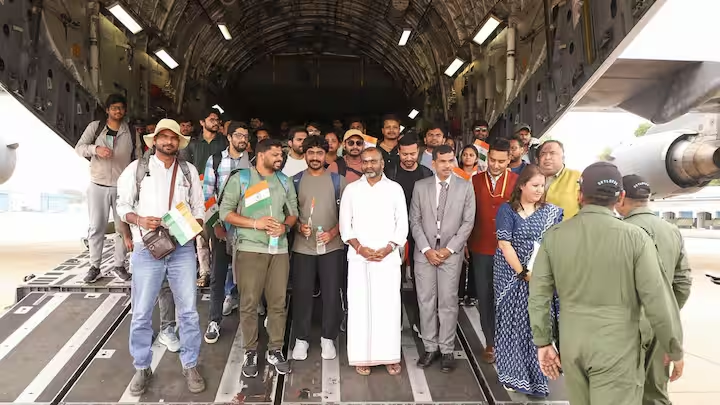

The Government of India has spent ₹216 crore over the past five years to evacuate more than 32,000 Indian nationals stranded in conflict-hit countries, highlighting the scale of its overseas rescue operations during major international crises.
According to information presented in Parliament, the evacuation efforts covered several emergency situations, including the Russia-Ukraine war, the Sudan conflict, the Israel-Hamas war, and escalating tensions involving Iran. These operations were carried out through coordinated efforts by the Ministry of External Affairs, the Indian Armed Forces, and multiple government agencies.
Among the largest rescue missions was Operation Ganga, launched in 2022 following Russia’s invasion of Ukraine. Thousands of Indian students, many of them studying medicine, were brought home through a combination of land evacuations and special flights from neighboring European countries.
The government has also conducted emergency evacuations from Sudan during the civil conflict and arranged special missions to bring Indian citizens back from Israel and Iran whenever regional security conditions deteriorated. Officials said these operations required close coordination with foreign governments, diplomatic missions, airlines, and military assets to ensure the safe return of stranded nationals.
Parliamentary data shows that more than 32,000 Indians were evacuated through these missions between 2021 and 2026, with the overall expenditure reaching ₹216 crore. The spending covered transportation, logistics, emergency assistance, and operational support for the large-scale rescue efforts.
The Ministry of External Affairs stated that protecting Indian citizens overseas remains one of its highest priorities. It added that India continues to monitor global security developments closely and is prepared to launch additional evacuation missions whenever the safety of its nationals is threatened.
Officials also noted that India’s expanding diplomatic network and crisis-response capabilities have strengthened its ability to respond quickly during international emergencies, enabling thousands of citizens to return home safely from some of the world’s most volatile conflict zones.