
Opinion | India–China Relations
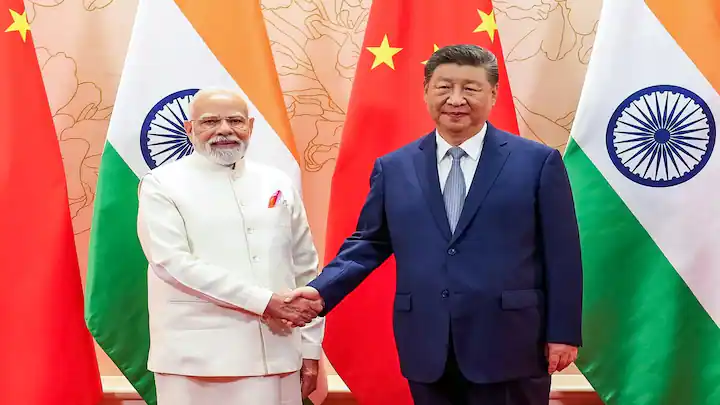
India and China remain two of Asia’s most powerful countries, yet their relationship continues to be shaped by mistrust, strategic competition and unresolved border tensions. A recent analysis published by Firstpost examines whether Beijing can realistically afford to keep India at arm’s length—or whether China may eventually need a more practical understanding with New Delhi.
The central question is increasingly important as both countries attempt to strengthen their positions in a rapidly changing global order. China has traditionally viewed India through the lens of regional competition, particularly because New Delhi is strengthening its partnerships with the United States, Japan, Australia and other Indo-Pacific powers.
India, meanwhile, has been careful to maintain strategic autonomy. While it has expanded cooperation with Western countries, New Delhi has also avoided becoming part of any formal anti-China alliance. This gives India room to engage with Beijing whenever its own economic and strategic interests demand it.
Border tensions remain the biggest obstacle
The relationship between the two Asian giants has been heavily affected by their disputed Himalayan border.
The military confrontation in eastern Ladakh in 2020 dramatically damaged bilateral trust. Although the two sides have since taken steps to reduce tensions and restore dialogue, the border issue continues to influence virtually every aspect of India-China relations.
For India, improving economic and diplomatic ties with China cannot be completely separated from the question of border security. New Delhi wants stability along the Line of Actual Control before it can consider a broader reset in relations.
China, on the other hand, has strong reasons to prevent its relationship with India from deteriorating further.
Why Beijing may want a deal
China is facing a complicated international environment. Its competition with the United States is intensifying, while Washington is increasingly working with partners across Asia.
Against this backdrop, a stable relationship with India could offer Beijing several advantages.
India represents one of the world’s largest consumer markets and has become increasingly important to global supply chains. At the same time, China remains a major source of machinery, electronics, industrial equipment and other goods for the Indian economy.
A prolonged confrontation therefore carries economic costs for both countries.
For Chinese President Xi Jinping, maintaining workable relations with India could also prevent New Delhi from moving even closer to Washington on strategic issues.
India has its own calculations
New Delhi is unlikely to accept an arrangement that compromises its strategic interests simply to improve relations with Beijing.
India has been steadily expanding its role in the Indo-Pacific and strengthening defence and economic cooperation with countries that share concerns about China’s growing influence.
At the same time, India understands that completely severing economic ties with China would be difficult and potentially costly.
This creates an unusual situation: India and China can be strategic competitors while still remaining important economic partners.
A possible pragmatic reset
The future of the relationship may therefore depend less on friendship and more on pragmatism.
Neither side needs to abandon its broader strategic objectives. Instead, both could focus on areas where cooperation remains possible—trade, investment, border management, climate issues, regional connectivity and multilateral diplomacy.
For India, any meaningful reset would likely require continued progress on the border. For China, rebuilding confidence would mean recognising that India is no longer willing to accept an unequal regional relationship.
The larger geopolitical picture also matters. With the United States and China locked in an increasingly intense contest for influence, Beijing may find that maintaining a stable relationship with India is preferable to pushing New Delhi further toward Washington.
The Dragon and the Elephant
India and China are unlikely to become close allies anytime soon. Their competing ambitions, border dispute and different strategic priorities are simply too significant.
But rivalry does not necessarily mean permanent confrontation.
The emerging reality may be one in which the “Dragon” and the “Elephant” compete where their interests collide while negotiating where cooperation serves both sides.
For Xi Jinping, reaching a workable understanding with India could therefore become strategically useful. For New Delhi, engaging Beijing without compromising national interests may offer its own advantages.
The real challenge will be finding that balance.
India and China may never dance as partners—but in an increasingly divided world, both may eventually realise that learning to move without stepping on each other’s toes is in their own interest.