
Economic slowdown deepens as manufacturing weakens despite continued growth in agriculture and services
DHAKA | July 20, 2026
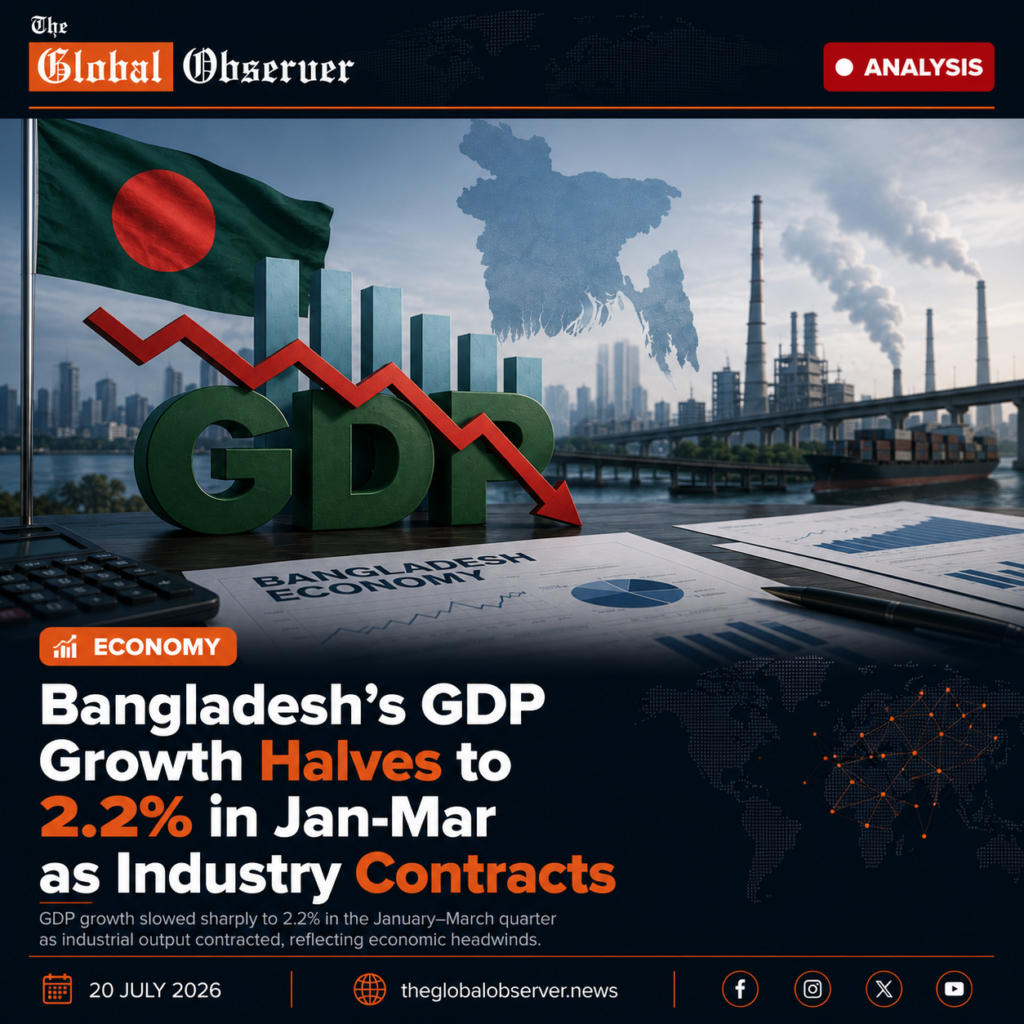
Bangladesh’s economic growth slowed sharply during the January–March quarter of fiscal year 2025–26, with provisional government data indicating that Gross Domestic Product (GDP) expanded by only 2.22%, reflecting a significant decline from the 4.53% growth recorded during the same period a year earlier. The slowdown was primarily driven by a contraction in the country’s industrial sector.
According to provisional estimates released by the Bangladesh Bureau of Statistics (BBS), weaker industrial production offset the positive contributions from agriculture and the services sector, highlighting continued pressure on the broader economy.
Industrial sector weighs on economic activity
The industrial sector, traditionally the largest contributor to Bangladesh’s economic expansion, recorded negative growth during the quarter. Analysts say weaker manufacturing activity, softer domestic demand and ongoing business challenges have reduced overall output and slowed investment across key industries.
Economists note that persistent inflation, tighter financial conditions and slower private-sector activity have also affected production and business confidence in recent months.
Agriculture and services remain positive
Despite the industrial slowdown, agriculture and services continued to post positive growth, helping prevent a sharper decline in overall GDP. However, their performance was not sufficient to offset the weakness in manufacturing and other industrial activities.
Growth outlook remains cautious
The latest GDP estimate comes as both domestic and international institutions have warned of a more challenging economic environment. The International Monetary Fund (IMF) recently projected Bangladesh’s economy to grow by around 3.5% in the current fiscal year, citing fiscal pressures, financial sector vulnerabilities and global economic uncertainty.
Economists believe restoring industrial momentum, encouraging private investment and maintaining macroeconomic stability will be critical to supporting stronger growth in the coming quarters.