
By Staff Reporter | International Desk
Bangladesh witnessed fresh political unrest following former Prime Minister Sheikh Hasina’s first public media interaction since her removal from office, with protests erupting in several parts of the country, effigies being burned, and isolated incidents of violence reported shortly after her address from New Delhi. The developments have also added new strain to already fragile diplomatic ties between Bangladesh and India.
Hasina, speaking virtually at an event organized by the Foreign Correspondents’ Club of South Asia (FCC South Asia) in New Delhi, reiterated her intention to return to Bangladesh later this year despite facing legal challenges. During her address, she defended her political legacy, criticized the current administration, and called for the ban on the Awami League to be lifted.
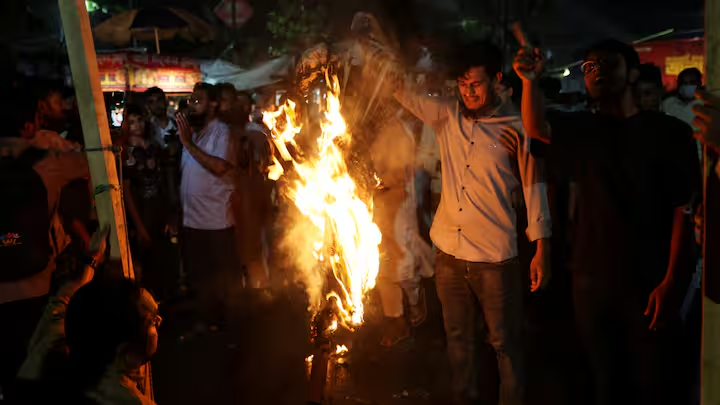
Her remarks triggered immediate reactions across Bangladesh. Demonstrators gathered in different locations, burning effigies of the former prime minister and staging protests against her planned political comeback. Security forces remained on alert as authorities monitored the demonstrations to prevent further escalation.
The tensions escalated further when the ancestral home of former Bangladesh cricket captain and ex-Awami League lawmaker Shakib Al Hasan in Magura came under attack. According to reports, unidentified attackers vandalized the property and threw petrol bombs at the building, causing a fire on the upper floor. No casualties were reported, as the house was unoccupied at the time. The attack occurred shortly after Shakib participated virtually in the same media event as Hasina.
The Bangladeshi government strongly criticized Hasina’s appearance, arguing that her speech violated existing legal restrictions on broadcasting her statements. Dhaka also expressed displeasure over the event being held in India, warning that it could further complicate bilateral relations between the two neighboring countries.
India, however, distanced itself from the programme, clarifying that the event was organized by a private media organization and did not have the backing or endorsement of the Indian government. New Delhi reiterated that Hasina’s remarks reflected her personal views and not India’s official position.
Political observers say Hasina’s decision to re-enter the public spotlight has once again polarized Bangladesh’s political landscape. While her supporters view the address as the beginning of a political comeback, critics argue that it has reignited tensions at a time when the country is attempting to stabilize its political environment. Analysts also believe the controversy could have broader diplomatic implications, particularly as Bangladesh continues to press India over Hasina’s status and extradition request.
With protests continuing in parts of the country and political rhetoric intensifying, authorities remain on high alert. Observers say the coming weeks will be crucial in determining whether the fallout from Hasina’s speech remains limited to political demonstrations or develops into a broader challenge for Bangladesh’s domestic stability and regional diplomacy.