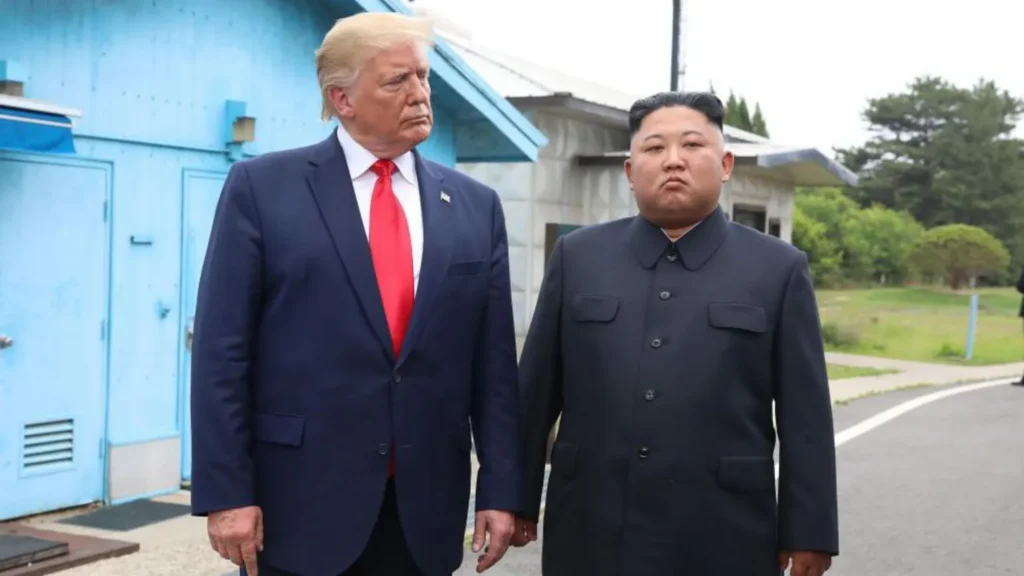

Washington/Seoul: US President Donald Trump has ordered the Pentagon to substantially reduce joint military exercises with South Korea, saying the drills are expensive and send an unnecessarily hostile message to North Korea. The move comes as Washington and Seoul begin their annual Ulchi Freedom Shield exercise.
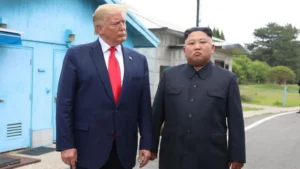
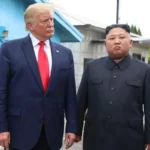
Trump said his decision was influenced by what he described as his “very good relationship” with North Korean leader Kim Jong Un. He argued that North Korea has remained relatively unthreatening toward the United States during his presidency and suggested that large-scale exercises with South Korea could undermine efforts to maintain that relationship.
Military exercises already underway
The announcement comes as the United States and South Korea have begun their annual joint military exercise. Around 18,000 South Korean troops are participating in this year’s drills, which are designed to strengthen the allies’ ability to respond to potential threats on the Korean Peninsula.
Trump acknowledged that the current exercise was already underway and therefore could not simply be cancelled. Instead, he instructed Defence Secretary Pete Hegseth to significantly reduce the scale of future joint exercises.
The president has previously criticised the financial cost of US military commitments overseas, and his latest comments again linked military exercises to the question of who ultimately pays for them.
North Korea factor
Trump’s decision represents another indication that his administration is seeking a different approach toward Pyongyang.
Rather than viewing military exercises solely as a deterrence measure, Trump appears to be considering their potential diplomatic impact on North Korea. His administration has repeatedly expressed interest in maintaining communication with Kim Jong Un.
The decision comes despite continuing security concerns on the Korean Peninsula. North Korea has continued developing and testing its missile capabilities, keeping South Korea, Japan and the United States on alert.
Seoul faces a delicate situation
For South Korea, the US military presence and joint exercises remain an important component of its national-security strategy.
The exercises allow American and South Korean forces to train together and improve coordination in the event of a crisis. Any significant reduction could therefore trigger debate in Seoul over whether Washington is weakening an important element of the alliance.
At the same time, South Korea has its own diplomatic calculations regarding North Korea and has sought to reduce tensions on the peninsula.
Trump also revealed that he recently asked South Korea’s president whether Seoul would participate in US efforts related to the denuclearisation of Iran, but was reportedly turned down.
What happens next?
The immediate impact of Trump’s order remains unclear. The current Ulchi Freedom Shield exercise is continuing, while the administration considers how future drills could be scaled back.
The bigger question is whether the reduction will become a temporary adjustment or signal a broader change in America’s military posture in South Korea.
For Washington, the move could be part of an attempt to create more diplomatic space with Pyongyang. For Seoul, however, maintaining credible military readiness remains essential given the continuing threat from North Korea.
Trump’s decision therefore places diplomacy and deterrence on a collision course: Washington wants to preserve its opening with Kim Jong Un, while South Korea must ensure that any reduction in military exercises does not weaken its ability to respond to a potential crisis.