
By Staff Correspondent | The Global Observer
DHAKA | July 22, 2026
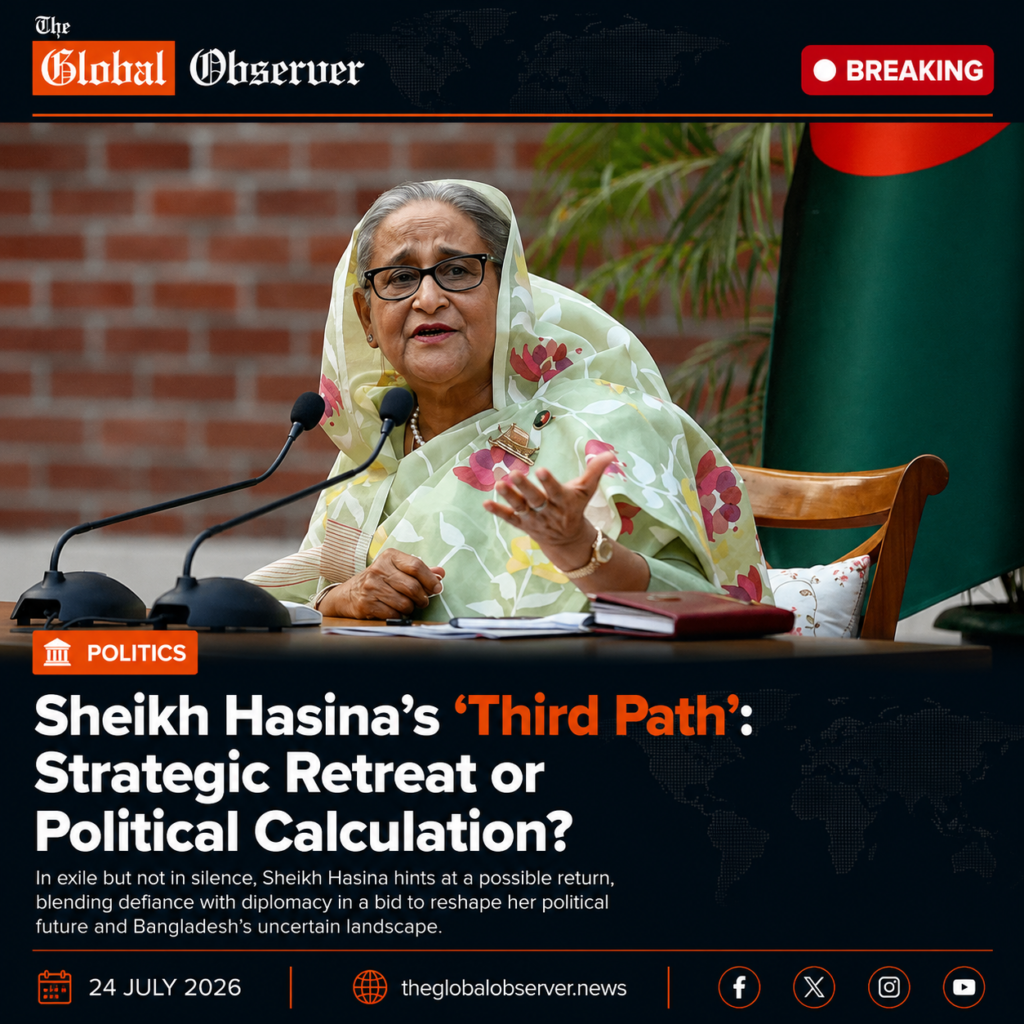
Nearly two years after the dramatic political upheaval of August 5, 2024, a new political analysis has reignited debate over one of Bangladesh’s most consequential decisions in recent history: former Prime Minister Sheikh Hasina’s departure from power.
Beyond Two Choices
According to the analysis, Bangladesh faced an extraordinary political crisis on August 5, 2024, when mass protests converged on the capital amid growing unrest.
The article argues that the situation appeared to leave only two immediate options: resisting protesters with force or surrendering political authority. It contends that Sheikh Hasina instead chose a different course by leaving the country, describing the decision as an attempt to avoid further violence and provide space for the nation to stabilize.
The author characterizes this decision as a form of “strategic retreat” rather than a political collapse.
A Humanitarian Interpretation
The opinion piece places particular emphasis on the humanitarian dimension of Hasina’s departure.
It argues that remaining in office during the escalating confrontation could have led to wider clashes and additional casualties. By leaving, the article suggests, she reduced the likelihood of prolonged violence and allowed state institutions to avoid a potentially more destructive confrontation.
This interpretation presents her departure as a decision aimed at limiting human suffering rather than prolonging political conflict.
Political Debate Continues
The article has entered an already polarized debate over the events surrounding August 2024.
Supporters of Sheikh Hasina have frequently argued that her departure prevented further instability and preserved the country’s institutional framework during a period of unprecedented political turmoil.
Critics, however, continue to maintain that her exit marked the end of a prolonged period of one-party dominance and opened the way for political transition. These competing narratives remain central to Bangladesh’s contemporary political discourse.
Return to Bangladesh
The publication comes shortly after Sheikh Hasina publicly stated in interviews with international media that she intends to return to Bangladesh despite facing ongoing legal proceedings and significant personal risks.
She has said she is prepared to appear before the courts, insisting that the allegations against her are politically motivated while expressing confidence that she will eventually return to the country.
Her planned return has renewed discussion over whether her departure in 2024 was temporary political strategy or a permanent end to her leadership.
An Opinion, Not an Official Finding
The BDDigest article is presented as an opinion analysis, not as an official investigation or judicial finding.
Its conclusions reflect the author’s interpretation of political events rather than independently established facts. As with many assessments of Bangladesh’s recent political crisis, the arguments remain subject to debate among political analysts, historians and observers.
The events of August 2024 continue to be interpreted differently by various political parties, commentators and international observers, reflecting the deeply divided perspectives surrounding one of the country’s most significant political turning points.
Looking Ahead
As Bangladesh continues to navigate its post-2024 political landscape, questions surrounding Sheikh Hasina’s leadership, her departure from power and her stated intention to return remain central to national politics.
Whether history ultimately views her decision as a humanitarian effort to prevent further conflict, a calculated political strategy, or something else entirely will likely remain the subject of debate for years to come.