
ISLAMABAD | July 22, 2026
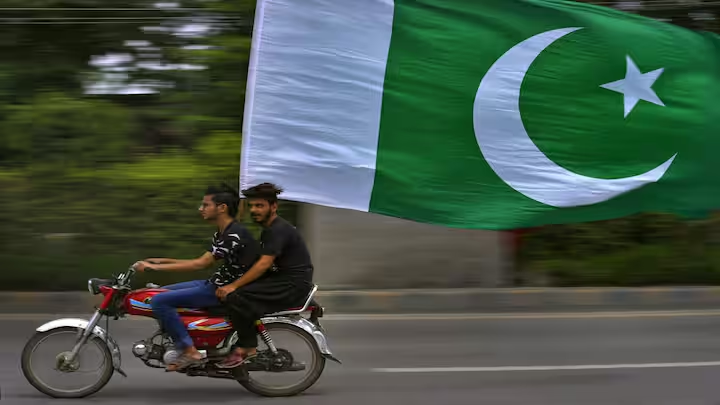
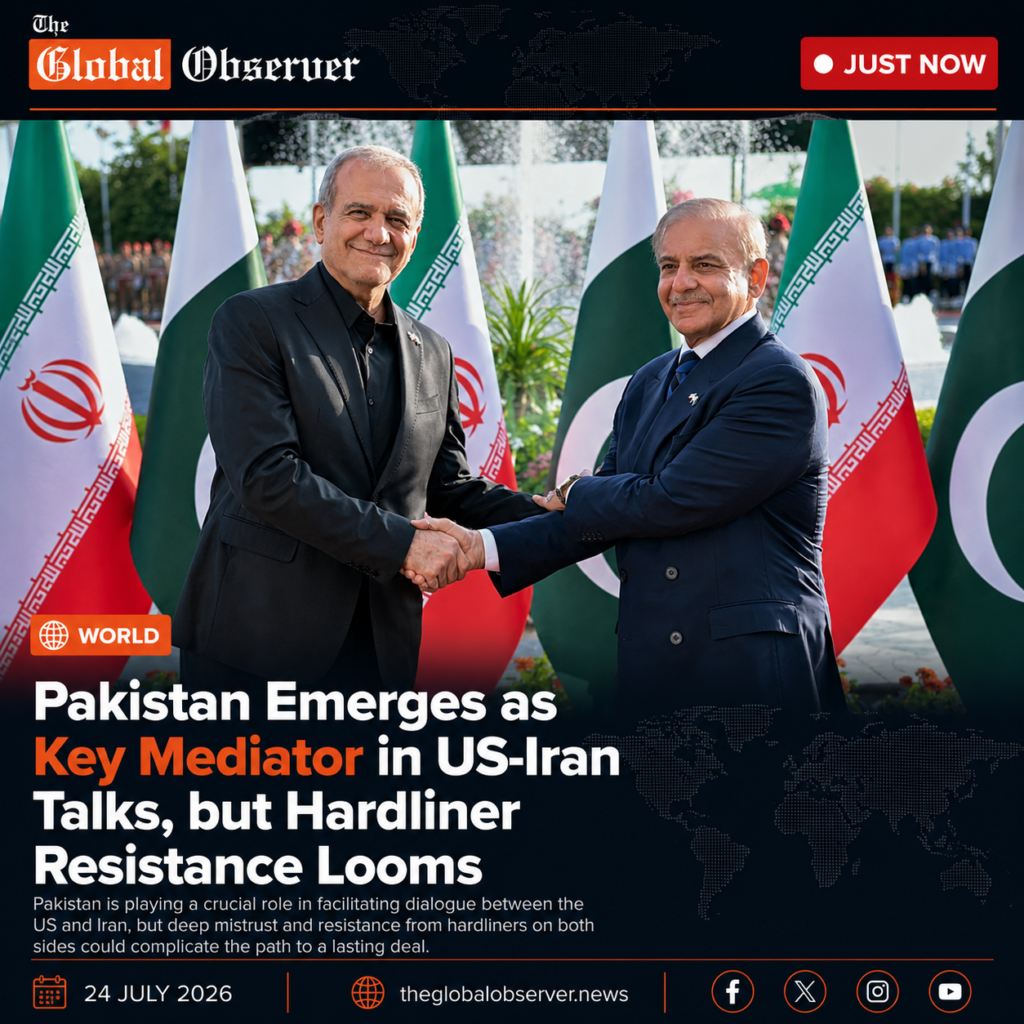
Pakistan has emerged as an unexpected diplomatic intermediary in renewed efforts to ease tensions between the United States and Iran, with officials from multiple countries quietly working to revive dialogue after months of heightened regional instability. However, analysts warn that any breakthrough could face significant resistance from powerful hardline factions within Iran.
The diplomatic initiative follows a period of escalating confrontation across the Middle East, including military exchanges involving Iran, Israel, and the United States. While no formal agreement has yet been announced, reports indicate that Pakistan has played an important behind-the-scenes role in facilitating communication between Washington and Tehran.
Pakistan’s Quiet Diplomatic Role
According to officials familiar with the discussions, Pakistan has used its longstanding relationships with both Iran and the United States to encourage dialogue aimed at reducing regional tensions.
Islamabad shares a lengthy border with Iran and has maintained diplomatic relations with Tehran despite broader geopolitical rivalries in the region. At the same time, Pakistan remains an important security partner of the United States, placing it in a unique position to serve as an intermediary.
Diplomatic observers say Pakistan’s involvement reflects its broader interest in preventing instability along its western border, where prolonged conflict could have serious security and economic consequences.
Hope for Renewed Negotiations
The reported mediation efforts are focused on creating conditions for future negotiations rather than securing an immediate comprehensive agreement.
Officials have indicated that confidence-building measures and indirect communication channels are being explored to reduce the risk of further military escalation. While details remain confidential, diplomats say both Washington and Tehran recognize the importance of avoiding another regional conflict.
Any progress could eventually contribute to discussions on broader issues, including sanctions, regional security, and Iran’s nuclear program.
Challenge From Iranian Hardliners
Despite cautious optimism among diplomats, experts believe the biggest obstacle lies inside Iran itself.
Hardline political and military factions remain deeply skeptical of direct or indirect engagement with the United States. Many continue to argue that Washington cannot be trusted after previous nuclear agreements collapsed and sanctions remained in place.
These groups hold considerable influence within Iran’s political system and could attempt to block or slow any diplomatic initiative perceived as making excessive concessions to the United States.
Political analysts note that Iran’s internal power structure often requires consensus among multiple institutions, making negotiations particularly complex even when senior government officials express interest in dialogue.
Regional Stakes Are High
The success or failure of the mediation effort could have significant implications across the Middle East.
Improved U.S.-Iran relations could reduce tensions affecting Iraq, Syria, Lebanon, and the Gulf region, while also lowering risks to global energy markets. Conversely, another breakdown in diplomacy could increase the likelihood of renewed military confrontation.
Pakistan also has a strong interest in regional stability, as continued conflict could disrupt trade routes, border security, and broader economic cooperation with neighboring countries.
International Response
Governments across the region are closely monitoring Pakistan’s diplomatic efforts.
Several countries have publicly supported renewed dialogue between Washington and Tehran, arguing that diplomacy remains the most effective way to reduce regional tensions. International observers have also welcomed any initiative that encourages communication after months of heightened uncertainty.
However, analysts caution that expectations should remain modest until concrete agreements emerge, noting that previous rounds of negotiations have repeatedly stalled due to political disagreements and mutual distrust.
What Happens Next?
Diplomatic contacts are expected to continue in the coming weeks, although no timeline has been announced for formal negotiations.
Observers say Pakistan’s role demonstrates its growing diplomatic relevance at a time when regional powers are searching for ways to prevent another major conflict in the Middle East.
Whether these efforts ultimately lead to a lasting agreement will depend not only on negotiations between Washington and Tehran but also on the willingness of influential political factions inside Iran to support a renewed diplomatic process.