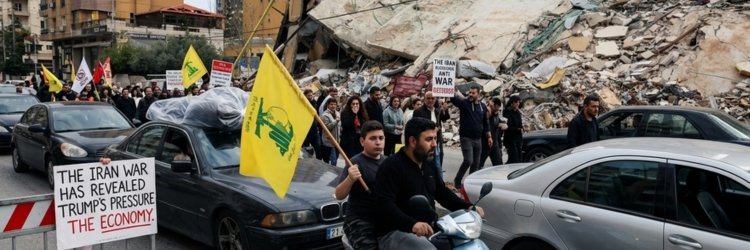

The ongoing Iran conflict has increasingly highlighted what analysts describe as the central political vulnerability of U.S. President Donald Trump: the economy.
Despite early claims of a swift military success, the seven-week war involving the United States, Israel, and Iran has instead produced sustained economic pressure, particularly through rising energy prices, inflation concerns, and declining consumer confidence. According to recent reporting, the conflict has failed to deliver its stated strategic goals while intensifying domestic economic strain.
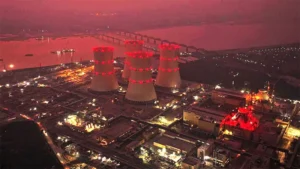
A key factor has been instability around the Strait of Hormuz, through which a significant share of global oil and gas flows. Disruptions in the region have contributed to energy market volatility and broader inflationary pressures, feeding into public anxiety over cost of living.
While the administration initially framed the war as a necessary short-term sacrifice for long-term stability, it has since shifted toward a more confident narrative, emphasizing strong markets and manageable fuel prices. However, economic indicators and public sentiment have increasingly moved in the opposite direction.
White House officials have pointed to resilient equity markets and moderate changes in gas prices as evidence of stability. Yet consumer sentiment data tells a different story, with surveys showing widespread pessimism about current and future economic conditions. Analysts note that such divergence between official messaging and household experience has historically created political risk for sitting administrations.
The administration’s economic framing has been reinforced by senior officials, including Treasury Secretary Scott Bessent, who has argued that strong consumer spending suggests underlying confidence despite negative survey responses. However, critics say this interpretation overlooks the impact of rising prices on household budgets.
The broader economic consequences of the conflict are also becoming clearer. Higher energy costs have contributed to inflationary pressures across transport, food, and industrial sectors, while disruptions in global shipping routes have increased insurance and logistics costs. These ripple effects have reinforced concerns that the war is no longer a distant geopolitical event but a direct driver of domestic economic conditions.
Analysts argue that this dynamic exposes a long-standing political reality for Trump: his public support is closely tied to perceptions of economic performance. Unlike foreign policy or security issues, economic conditions tend to be felt immediately by voters through prices, wages, and financial markets.
The war has also triggered international concern about global economic stability. Energy economists warn that prolonged disruptions in the Gulf could sustain higher oil prices and inflationary pressure worldwide, particularly if tensions around maritime chokepoints persist.
At the same time, markets have shown mixed signals—recovering at times but remaining sensitive to developments in the conflict. Economists note that while financial indicators can rebound quickly, household sentiment tends to recover more slowly, especially after prolonged periods of uncertainty.
The political implications are increasingly significant. Polling suggests that a majority of Americans view the economy negatively and believe conditions have worsened in recent months. That gap between official optimism and public perception has widened since the escalation of the Iran conflict.
For Trump, the situation presents a familiar challenge: sustaining support while managing an economy shaped by external shocks. As past political cycles have shown, even strong macroeconomic indicators may not translate into public confidence if prices and uncertainty dominate daily experience.
Ultimately, analysts say the Iran war has reinforced a key lesson in modern politics—military action abroad can quickly become an economic issue at home. And for this administration, that connection appears to be the most consequential pressure point of all.