
Viktor Orbán, Europe’s longest-serving leader, is facing mounting political pressure as Hungary’s opposition coalesces around a rising challenger promising rapid change and reform ahead of the next national election.
After more than a decade in power, Orbán’s dominance—built on a strong centralised state, conservative social policies, and an often combative stance toward the European Union—appears increasingly vulnerable as political momentum shifts toward a new generation of leadership.
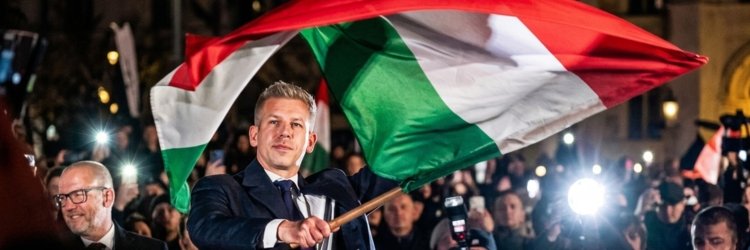
At the center of this challenge is a fast-rising opposition figure, often described by supporters as a “man in a hurry,” who has rapidly mobilized public support around promises to overhaul governance, strengthen democratic institutions, and realign Hungary more closely with EU norms. His campaign has tapped into growing public frustration over inflation, governance concerns, and Hungary’s strained relations with Brussels.
Political analysts say the emerging contest represents one of the most significant shifts in Hungarian politics since Orbán returned to power in 2010. While his government still maintains strong institutional control and a loyal voter base, opposition forces have become more organized and increasingly confident in their ability to mount a credible national challenge.
Orbán’s leadership has been defined by his “illiberal democracy” model, which critics argue has weakened judicial independence, restricted media freedom, and consolidated executive authority. Supporters, however, credit him with maintaining political stability, economic growth in earlier years, and strong national sovereignty within the EU framework.
The opposition, by contrast, is positioning itself as a reformist alternative. It is campaigning on restoring checks and balances, improving transparency, and addressing economic pressures that have affected households in recent years, including rising prices and public service concerns.
The shift in momentum has been particularly notable in urban areas and among younger voters, where dissatisfaction with the current political establishment has grown. Analysts suggest that these demographic trends could play a decisive role in shaping the outcome of the next election cycle.
However, Orbán’s political machine remains formidable. His governing party continues to benefit from strong organisational networks, media influence, and a loyal rural voter base. Elections in Hungary have historically been highly competitive, and political observers caution that the balance of power is far from settled.
Relations with the European Union also remain a central issue in the political debate. The opposition has signaled a desire to improve ties with Brussels and unlock suspended EU funding, while Orbán has maintained a more confrontational stance, arguing for greater national autonomy in policymaking.
As the campaign landscape evolves, both sides are intensifying their messaging. Orbán’s government is emphasizing stability, sovereignty, and economic continuity, while the opposition is focusing on change, institutional reform, and a faster pace of political transformation.
With elections approaching, Hungary appears to be entering a decisive political moment. Whether Orbán can extend his long-standing rule or a new leadership era emerges will depend on how effectively each side mobilizes voters in an increasingly polarized environment.