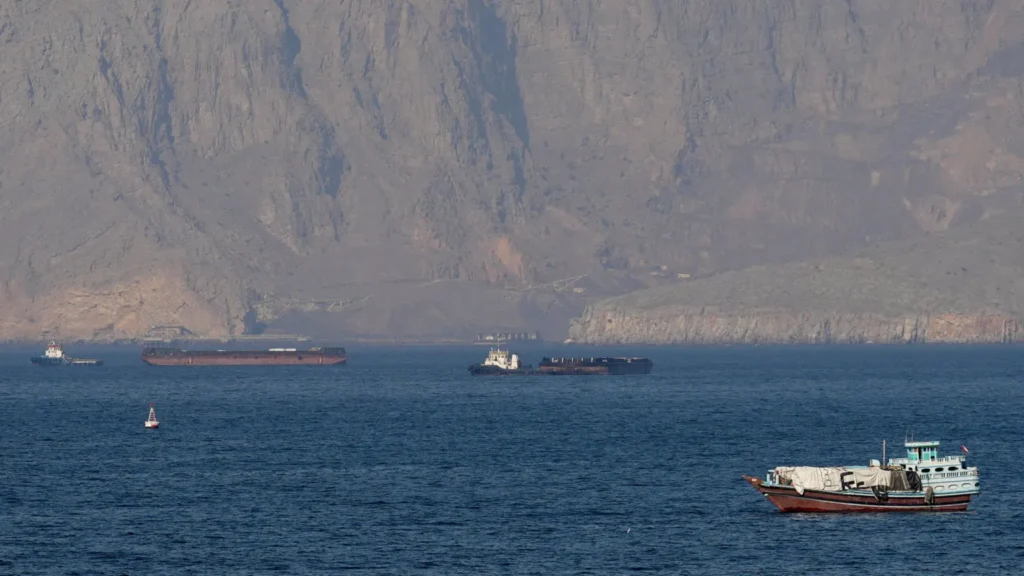

Iran has announced that the Strait of Hormuz is open for commercial shipping, yet maritime tracking data indicate that vessel movement through the critical waterway remains minimal, raising ongoing concerns about safety and stability in the region.
Iran’s Foreign Minister, Abbas Araghchi, stated on Friday that commercial vessels are permitted to transit through the strait using designated safe routes. The announcement came during the first full day of a 10-day ceasefire linked to regional tensions involving Israel and Lebanon. However, he emphasized that ships must adhere strictly to coordinated maritime lanes outlined by Iranian authorities.
Despite the declaration, uncertainty persists. Iran had effectively restricted access to the strategic oil corridor following military strikes by the United States and Israel on 28 February. Meanwhile, a ceasefire agreement between Washington and Tehran is set to expire on 22 April, further complicating the situation.
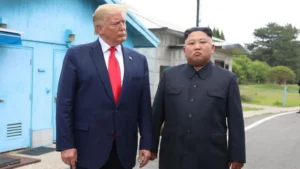
U.S. President Donald Trump signaled that pressure on Iran would continue, stating that a naval blockade of Iranian ports would remain in place until a broader peace agreement is reached. While describing the moment as “a great and brilliant day for the world,” his remarks contrasted with ongoing concerns from global shipping and security experts.
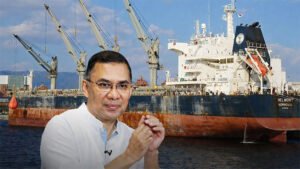
Maritime organizations have urged caution, noting that they are still assessing whether the route is genuinely safe for navigation. Data tracking systems show only limited vessel movement through the strait, suggesting that shipping companies remain hesitant to resume normal operations.
Iranian state media later clarified that while commercial vessels may pass through designated routes, military ships are still prohibited from entering the strait. The routes reportedly align with corridors proposed by Iran’s Islamic Revolutionary Guard Corps (IRGC), which avoid high-risk zones near key Iranian islands.
However, mixed messaging from Iranian officials has added to the uncertainty. Some domestic outlets criticized the foreign minister’s statement as incomplete, while senior political figures warned that the strait’s status could quickly change if U.S. military pressure continues.
The Strait of Hormuz is one of the world’s most vital energy chokepoints, with roughly 20% of global oil and liquefied natural gas supplies passing through it under normal conditions. Recent hostilities, along with threats of mines and attacks on tankers, have significantly reduced traffic and triggered volatility in global energy markets.
Although oil prices briefly declined following Iran’s announcement, industry experts remain cautious. The head of the International Maritime Organization stated that while some vessels may have begun moving, verification is ongoing, noting that certain ships may disable tracking systems to avoid potential targeting.
Security analysts also expressed skepticism, warning that the underlying risks—particularly the possibility of naval mines—have not been resolved. As a result, the outlook for shipping through the strait in the coming weeks remains uncertain.
In response to the crisis, the United Kingdom and France have proposed a multinational maritime security initiative aimed at protecting commercial shipping routes. The mission, expected to be strictly defensive, would be deployed once regional hostilities subside.
For now, despite official assurances, the gap between political statements and on-the-ground realities continues to cast doubt over the true accessibility of one of the world’s most strategically important waterways.