
More than 100 international law scholars have issued an open letter expressing “profound concern” over what they describe as serious violations of international law committed by the United States, Israel, and Iran amid the ongoing Middle East conflict.
The letter argues that the joint US-Israeli military actions against Iran constitute a clear breach of the United Nations Charter, which restricts the use of force to self-defence or actions authorized by the UN Security Council.
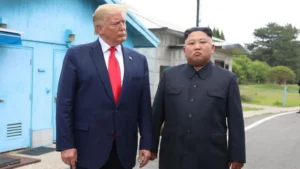
The signatories warn that escalating rhetoric from senior officials, including U.S. President Donald Trump, has raised additional legal and ethical concerns. They cite Trump’s reported threats to “obliterate” Iranian infrastructure as potentially incompatible with international humanitarian law.
The White House rejected the criticism, defending Trump’s approach and stating that his actions have made the region “safer and more stable.” Officials also dismissed the signatories as “so-called experts,” arguing that the administration is acting to eliminate threats posed by Iran.
The letter further highlights controversial remarks by U.S. Defense Secretary Pete Hegseth, particularly his statement that “no quarter” should be given to enemies. Under international humanitarian law, such declarations are prohibited, as combatants are required to allow surrender and protect wounded individuals.
Legal scholars say such language may violate established rules of armed conflict, including provisions outlined in the U.S. military’s own law-of-war manual. The signatories argue that public statements of this nature risk undermining core protections for civilians and soldiers alike.
Among those endorsing the letter are prominent legal figures, including former U.S. State Department legal adviser Harold Hongju Koh and Yale Law professor Oona A. Hathaway, as well as former military legal officials. They warn that ongoing conduct in the conflict could erode long-standing norms governing warfare.
The experts also raise concerns about civilian casualties reported across multiple theaters of the conflict. According to figures cited in the letter, thousands have been killed in strikes across Iran, Lebanon, Israel, and Gulf states since the escalation began.
In Iran alone, human rights monitors estimate over 1,600 civilian deaths, including hundreds of children. Lebanese authorities have reported more than 1,300 deaths from Israeli strikes since early March, while Israeli emergency services report dozens of civilian deaths from missile attacks launched from Iran and Lebanon. Additional casualties have been reported across Gulf states impacted by Iranian strikes.
The United Nations has also weighed in. UN humanitarian chief Tom Fletcher told the BBC that international law appears to have been “thrown aside” in parts of the conflict, emphasizing that while the rules remain clear, enforcement is increasingly weak.
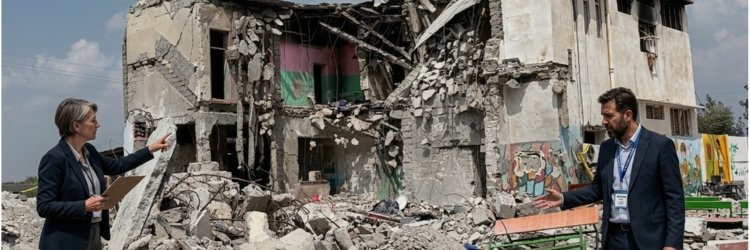
One of the most serious allegations in the letter concerns an airstrike on a primary school in the Iranian town of Minab. The attack reportedly killed more than 160 people, including over 100 children. Investigations are ongoing, including by the U.S. Department of Defense, which has suggested the strike may have resulted from outdated intelligence or targeting errors.
Legal experts warn that if evidence shows recklessness or disregard for civilian life, the incident could amount to a war crime under international humanitarian law.
The letter, published in the academic journal Just Security at New York University School of Law, calls for urgent accountability and stronger enforcement mechanisms to uphold the rules governing armed conflict.
In response, the White House accused Iran of long-standing human rights abuses and terrorism sponsorship, arguing that U.S. actions are aimed at neutralizing threats and protecting allies. Officials maintain that the current military posture is necessary to counter Iranian aggression and restore regional stability.
As the conflict continues, the divide between legal criticism and political justification underscores a broader debate over the application—and enforcement—of international law in modern warfare.