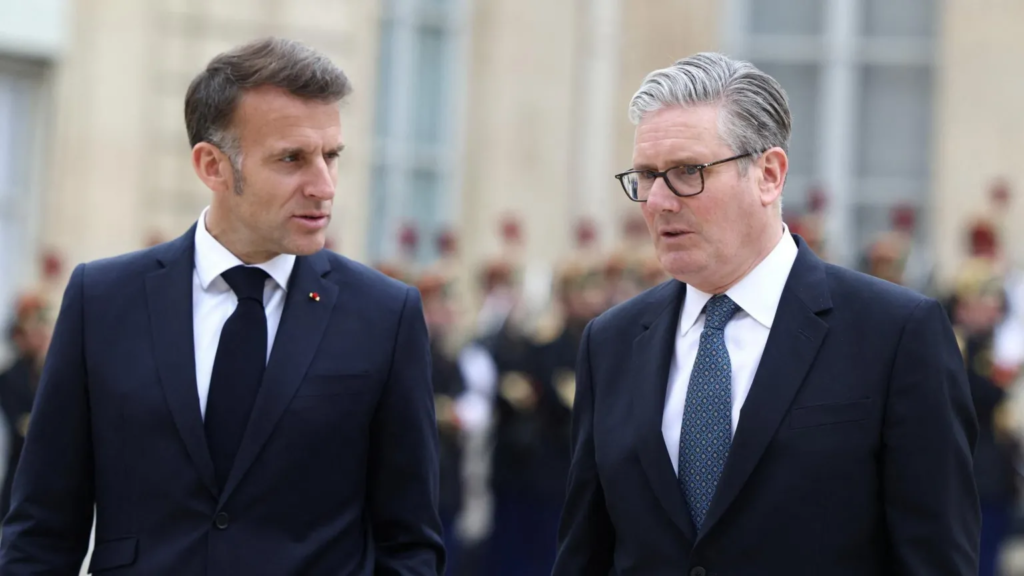

The United Kingdom and France are set to lead a multinational maritime mission to protect commercial shipping routes in the strategically vital Strait of Hormuz, Prime Minister Keir Starmer has announced.
Speaking after a high-level meeting involving 51 countries, Starmer emphasized that the proposed operation would be “strictly peaceful and defensive” in nature. He clarified that deployment would only take place once active hostilities in the region have subsided, underscoring a cautious and measured approach by participating nations.
The initiative comes amid ongoing instability in the Gulf region, where tensions escalated following military strikes by the United States and Israel on Iran in late February. In response, Iran effectively restricted access to the Strait of Hormuz—one of the world’s most critical energy transit corridors—disrupting global supply chains and driving up fuel and energy prices worldwide.
Although Iran’s Foreign Minister Abbas Araghchi recently declared that the strait is now “completely open” for commercial shipping during a temporary ceasefire, skepticism remains within the international community. Maritime tracking data continues to show limited vessel movement through the passage, suggesting that shipping companies are still wary of potential risks, including mines and unresolved security threats.
U.S. President Donald Trump welcomed Iran’s announcement, echoing claims that the waterway had reopened. However, he simultaneously confirmed that a U.S. naval blockade targeting Iranian ports would remain in effect until a comprehensive peace agreement is reached.
In a series of remarks, Trump also criticized NATO, describing it as ineffective during the crisis. He revealed that the alliance had offered assistance, but he declined the proposal, stating publicly that such involvement was unnecessary unless member states intended to directly participate in oil transport operations. His comments reflect ongoing tensions between Washington and its traditional allies over burden-sharing and strategic priorities.
Despite these divisions, European leaders have moved forward with their own coordinated response. Standing alongside Emmanuel Macron, Starmer confirmed that dozens of countries have already expressed willingness to contribute naval and logistical assets to the mission.
“This will be strictly peaceful and defensive, as a mission to reassure commercial shipping and support mine clearance,” Starmer said. “We invite all nations with an interest in the free flow of global trade to join us.”
Further operational details are expected to be finalized following a military planning conference scheduled to take place in London next week. The mission is anticipated to focus on safeguarding merchant vessels, ensuring safe navigation routes, and potentially assisting in the detection and removal of naval mines.
Meanwhile, Tehran has indicated that the Strait of Hormuz will remain open to commercial vessels until at least the middle of next week, coinciding with the duration of the current ceasefire agreement between Iran and the United States. However, uncertainty persists over what will happen once the ceasefire expires, particularly given Washington’s continued enforcement of its naval blockade.
Although there was a brief uptick in shipping activity across the Gulf region following Iran’s announcement, maritime monitoring services report that only a small number of vessels have actually transited through the strait. This hesitation highlights the lingering concerns among global shipping operators, many of whom remain reluctant to risk entering a potentially volatile zone.
President Macron warned that the earlier closure of the strait has already had “very severe consequences” for the global economy. He noted that while recent developments offer some optimism, caution remains essential given the fragile nature of the situation.
Adding to the growing international response, Friedrich Merz stated that Germany is prepared to contribute to efforts aimed at maintaining freedom of navigation in the region. He also подчеркнул the importance of U.S. involvement, suggesting that a coordinated transatlantic approach would strengthen the mission’s effectiveness.
The Strait of Hormuz remains a critical artery for global trade, with approximately one-fifth of the world’s oil and liquefied natural gas passing through it under normal conditions. Any prolonged disruption poses significant risks not only to energy markets but also to broader economic stability, including supply chains for fuel, food, and industrial goods.
As diplomatic efforts continue and military planning advances, the proposed UK-France-led mission represents a significant step toward stabilizing one of the world’s most strategically important waterways. However, its success will ultimately depend on sustained cooperation, clear communication, and a lasting de-escalation of tensions in the region.