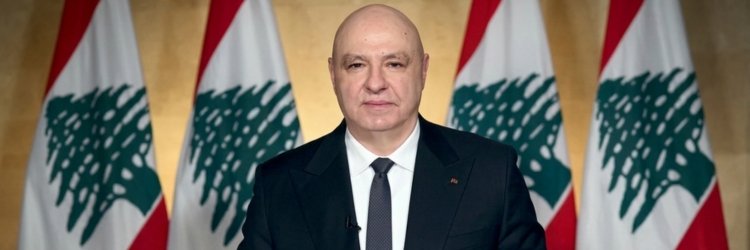

Lebanon’s president has declared that the country is “no longer a pawn” in regional conflicts, as a fragile ceasefire with Israel continues to hold amid ongoing diplomatic and security tensions.
The remarks reflect Beirut’s effort to assert greater sovereignty over its security and foreign policy decisions, at a time when the country remains deeply affected by spillover from regional hostilities involving Israel and Iran-aligned groups in the region.
Lebanon’s president said the country is seeking to reposition itself as an independent actor rather than a battleground for external powers. The statement comes as authorities cautiously monitor the stability of the current ceasefire arrangement, which has helped reduce large-scale cross-border escalation but has not fully eliminated security incidents.
The president’s comments are widely seen as a signal to both domestic and international audiences that Lebanon intends to distance itself from proxy dynamics that have repeatedly drawn it into regional conflicts. Successive crises over the past years have strained the country’s economy, infrastructure, and political stability, leaving it heavily dependent on external aid and diplomatic mediation.
The ceasefire with Israel has been described as fragile but operational, with both sides generally avoiding major escalation in recent weeks. However, intermittent incidents along the southern border continue to raise concerns about the potential for renewed violence.
Lebanese officials have emphasized that maintaining calm is essential not only for security reasons but also for economic recovery. The country is currently facing one of the worst financial crises in its modern history, compounded by political paralysis and the long-term effects of regional instability.
At the same time, Lebanon remains under pressure from multiple external actors and internal armed groups, making its path toward full stability complex. The government has repeatedly called for international support while stressing the importance of respecting national sovereignty.
Analysts note that the president’s framing of Lebanon as “no longer a pawn” is both symbolic and strategic, aimed at reinforcing state authority and signaling a shift away from being drawn into broader regional confrontations.
However, challenges remain significant. Lebanon’s internal divisions, economic hardships, and geopolitical position between competing regional powers continue to limit its ability to fully control its security environment.
For now, the ceasefire offers a temporary window of relative calm, but officials acknowledge that long-term stability will depend on sustained diplomatic engagement and broader regional de-escalation.